Social Criminal Code: new sanctions regime since 1 September 2026
The law of 16 March 2026 revised the Social Criminal Code, with a new sanctions regime in force since 1 September 2026. The final amounts remain largely unchanged, but one point that went largely unnoticed has a direct effect on the QHSE function: the limitation period for administrative fines increased from five to ten years as of 11 April 2026.
The law of 16 March 2026 revised the Social Criminal Code, with a new sanctions regime in force since 1 September 2026. The final amounts remain largely unchanged, but one point that went largely unnoticed has a direct effect on the QHSE function: the limitation period for administrative fines increased from five to ten years as of 11 April 2026.
What changed on 1 September 2026
The law of 16 March 2026 amending the law of 5 March 1952 on additional decimes on criminal fines, the Social Criminal Code and various provisions of social criminal law, entered into force on 1 September 2026. It aligns the Social Criminal Code with the new Criminal Code, restructuring sanction levels rather than generally increasing amounts.
The base amounts in articles 101 and 101/1 are multiplied by eight, but the additional decimes coefficient is reduced in return, so the final amounts due remain, for the most part, those applicable since 1 February 2026.
Sanction levels after 1 September 2026
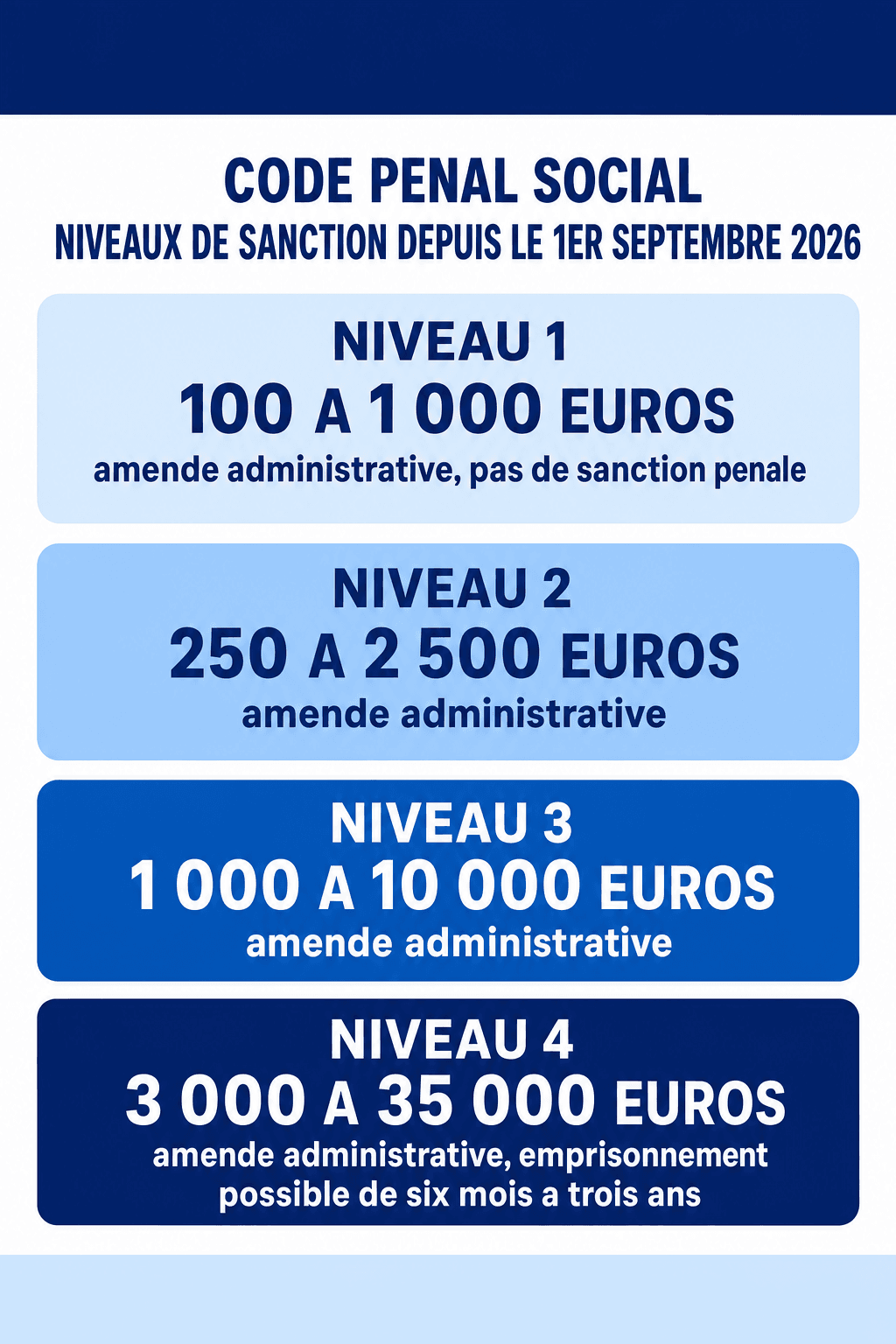
The Social Criminal Code maintains four sanction levels. Final amounts, including additional decimes, for acts committed from 1 September 2026:
- Level 1: administrative fine of 100 to 1,000 euros, no criminal sanction.
- Level 2: criminal fine of 500 to 5,000 euros, or administrative fine of 250 to 2,500 euros.
- Level 3: criminal fine of 2,000 to 20,000 euros, or administrative fine of 1,000 to 10,000 euros.
- Level 4: imprisonment from six months to three years and a criminal fine of 6,000 to 70,000 euros, or an administrative fine of 3,000 to 35,000 euros.
Levels 2, 3 and 4 now explicitly reference the alternative penalties available to the judge: probation, community service, a fine calculated on the profit derived or expected from the offence, and electronic monitoring.
The change that matters most for the QHSE function: the 10-year limitation period
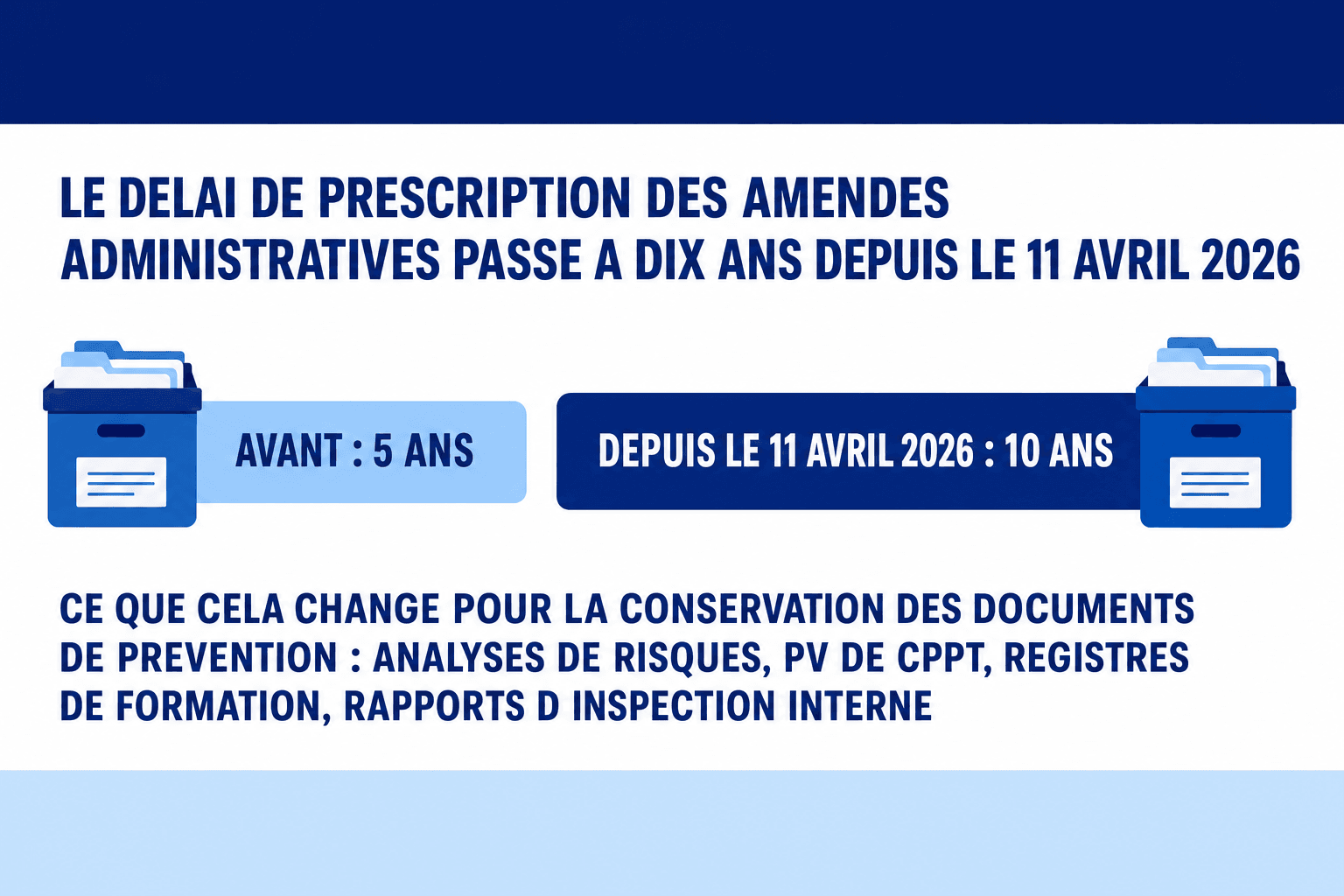
Since 11 April 2026, the limitation period for administrative fines in social criminal law has increased from five to ten years. This point has less visibility than the fine amounts, but it has a direct operational consequence: prevention documents that serve as proof of compliance, risk assessments, CPPT/CPBW meeting minutes, training records, job descriptions, internal inspection reports, must now remain available and usable for twice the period that previously applied.
Breaches of the Code on Wellbeing at Work fall under the Social Criminal Code in the same way as breaches of labour law or social security law. With this new period, an inspection check can therefore cover facts well before the date of the check, provided the documentary evidence still exists.
What to check now
Three concrete points to check in light of this reform:
- The retention period for prevention documents in the company's archiving policy, to make sure it now covers ten years rather than five.
- The traceability of successive risk assessments, not just the version currently in force, since a check can cover an earlier period.
- The ability to quickly retrieve a document several years old, which depends directly on how prevention data is structured and indexed, not just retained.
Sources
- Law of 16 March 2026 amending the Social Criminal Code and various provisions of social criminal law, in force since 1 September 2026
- Extension of the limitation period for administrative fines in social criminal law, in force since 11 April 2026
- Social Criminal Code · Book II, provisions relating to wellbeing at work