Subcontracting and Safety: The Weak Link Principal Contractors Keep Underestimating
Work accident statistics in sectors with high subcontracting reveal a troubling reality: subcontracted workers are overrepresented in severe and fatal accidents. Despite European data highlighting this phenomenon, the prevailing response often remains limited to documentation. However, safety management is not merely about administrative checks. Discover how genuine preventive coordination and on-the-ground integration can transform worker safety, regardless of their status. Don’t let the ill...
Workplace accident statistics in high-subcontracting sectors reveal a persistent pattern: subcontracted workers are overrepresented in serious and fatal accidents relative to their share of the total workforce. This is not new. What is concerning is that the dominant response remains documentary.
What European Data Shows
EU-OSHA has documented this overrepresentation repeatedly. External workers generally have less knowledge of the site, its specific risks, its co-activity rules. They are often less integrated into safety information channels. Their induction is frequently reduced to a formal minimum. And economic pressure on subcontractors creates systemic incentives to shorten safety procedures.
The legal dimension is often poorly understood. In most European legislation explicitly in Directive 89/391/EEC the principal contractor has a prevention coordination responsibility that goes well beyond document verification.
Having an up-to-date folder of subcontractor documents is not subcontracting safety management. It is administrative management that can give the illusion of control without the substance.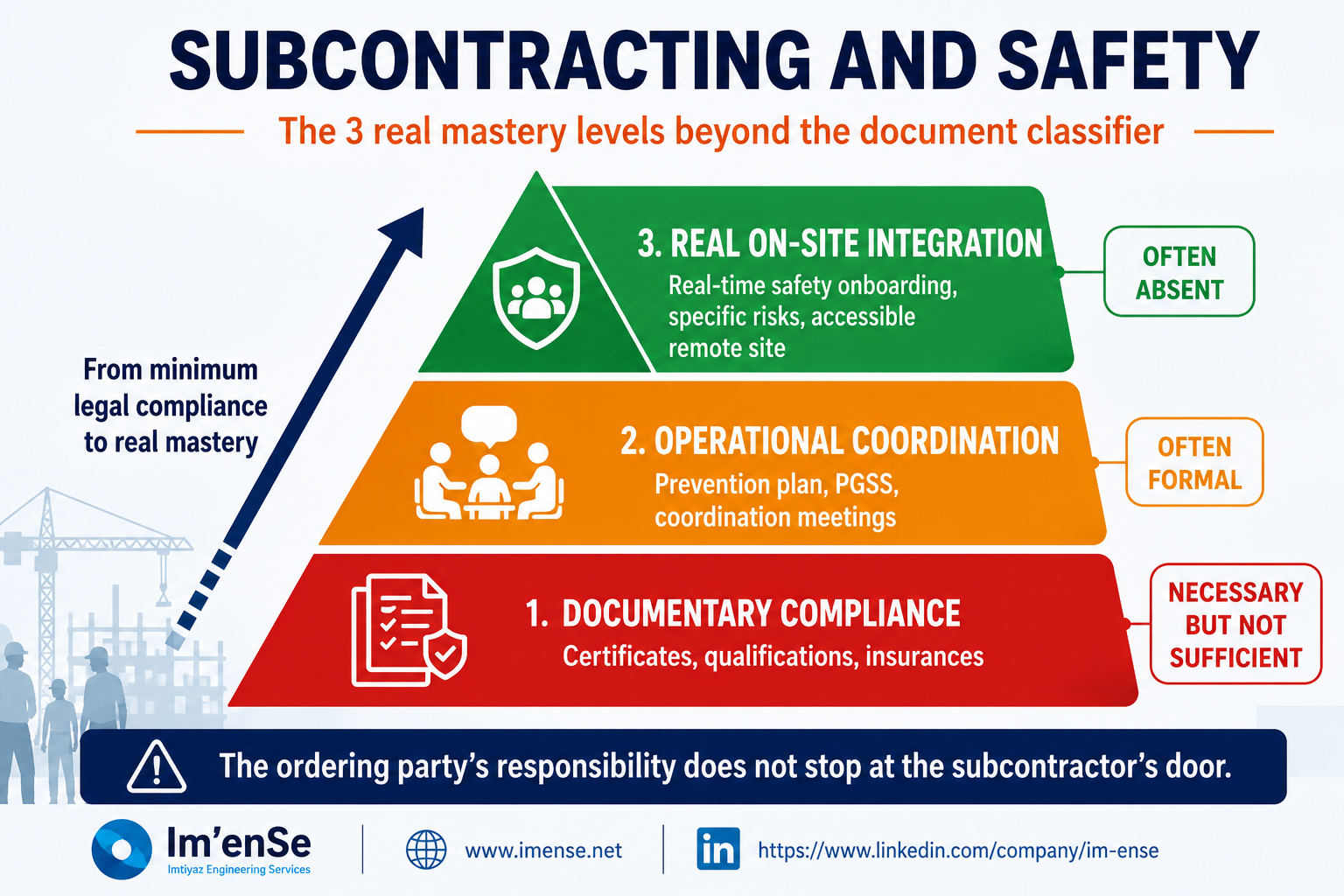
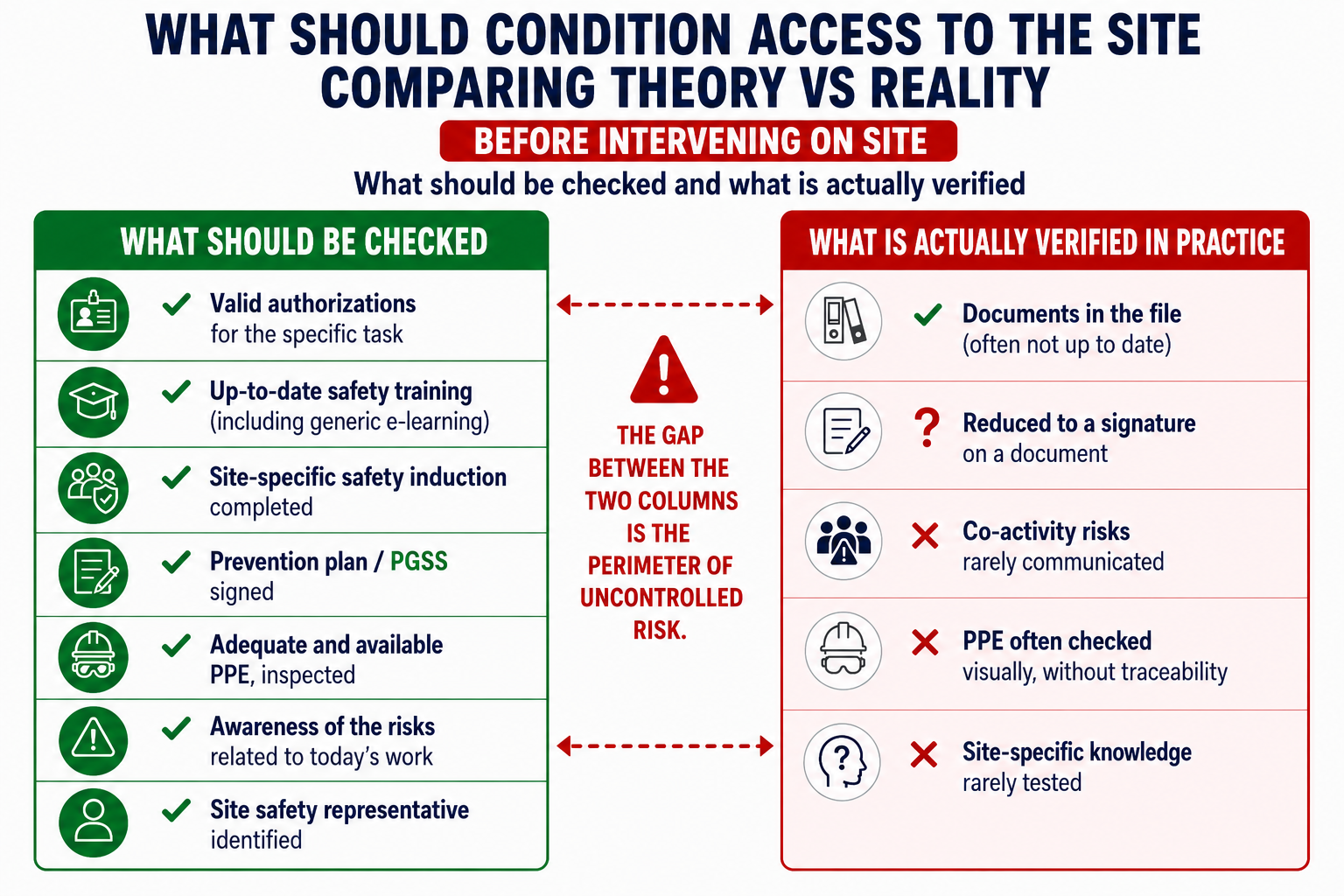
Document Compliance vs Real Risk Control
A subcontractor can have all their documents in order and not know the specific co-activity risk in the zone where they are working that day. Real subcontracting risk control requires three distinct levels: document compliance (necessary but insufficient); operational prevention coordination; and genuine field integration real safety induction, specific risk communication, field reporting mechanisms accessible to external workers.
Conclusion
Subcontracting is permanent. What can change is how principal contractors assume their prevention coordination responsibility not on paper, but in the real practices that allow every worker, regardless of status, to work in controlled safety conditions.