Work permits, qualification checks and corrective action follow-up on industrial sites
Work permits, qualification checks and corrective action follow-up are the levers that determine whether a prevention plan is actually applied on the ground. Part 2 of our series on co-activity and subcontracting.
Read Part 1: Co-activity and subcontracting on large industrial sites: where risk concentrates
Prevention plans set the framework. Work permits, verification of qualifications, and follow-up of corrective actions are the operational levers that determine whether that framework is actually applied on the ground, day to day.
The work permit: a living document, not an administrative formality
The work permit governs interventions with particular risks: work at height, work in confined spaces, work on live installations, hot work. Its value lies in being kept up to date, not merely in existing.
A permit signed at the start of the week and not re-examined for a Thursday intervention no longer reflects the site's actual conditions. Good practice calls for validation at the start of each shift, verification of on-site conditions before work begins, and formal closure as soon as the work is finished or interrupted.
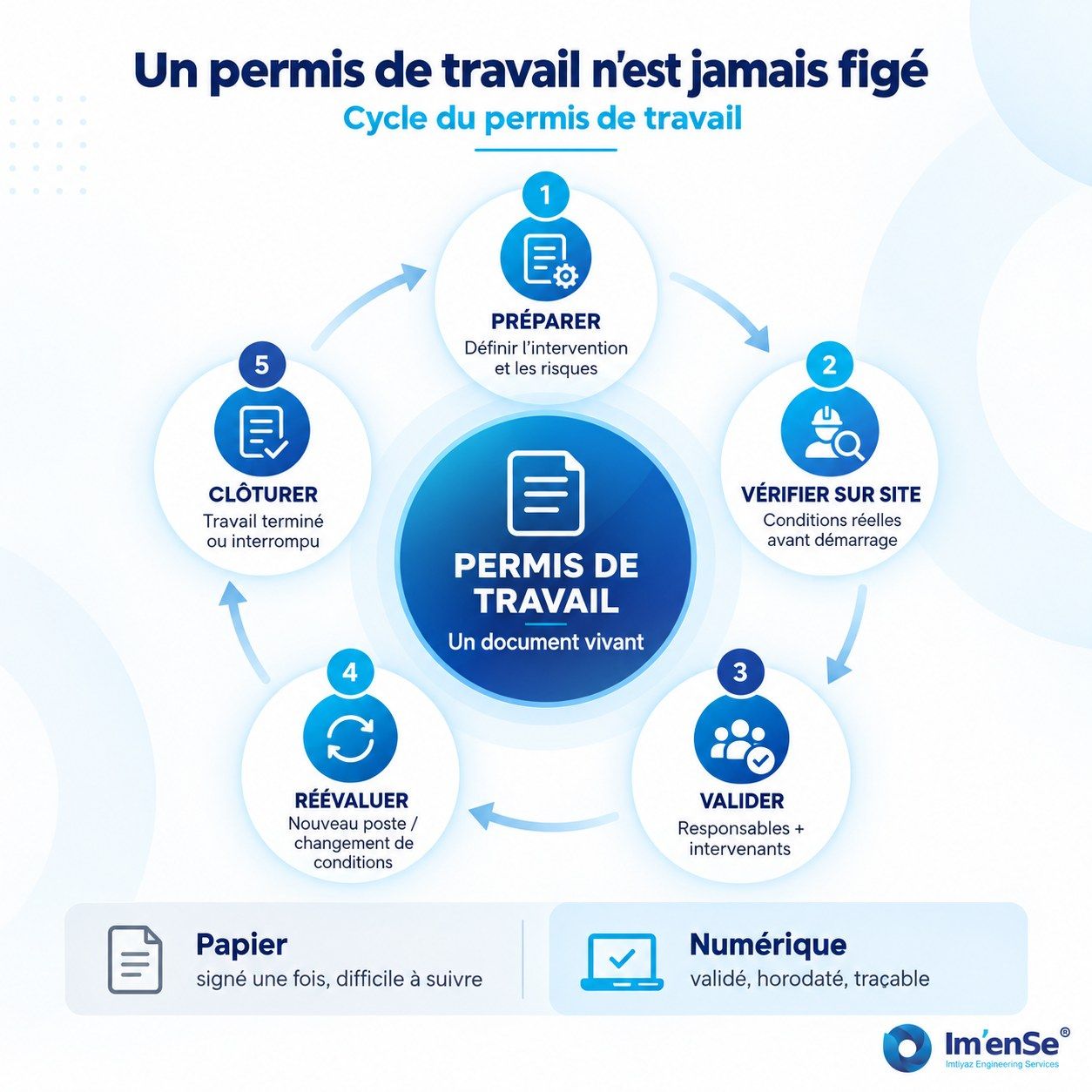
Paper-based processes make this discipline hard to maintain. Forms are often filled in after the fact, signatures obtained for convenience rather than genuine verification. A digital format — the kind of approach offered by Permit to Work®, for instance — makes it possible to condition the start of an intervention on effective validation by the parties concerned, with full traceability of every step in the cycle.
Verifying qualifications before site access
A worker who accesses a site without their qualifications, mandatory training, and work authorisations having been verified represents an uncontrolled risk. Operational pressure tends to dilute this vigilance: the worker is expected, the work is scheduled, verification takes time.
Real-time verification relies on a single, accessible, up-to-date reference system. For each worker, the system must make it possible to instantly confirm that the training required for the intervention area or type of work is valid. If not, access is made conditional on compliance being achieved, not bypassed under time pressure.
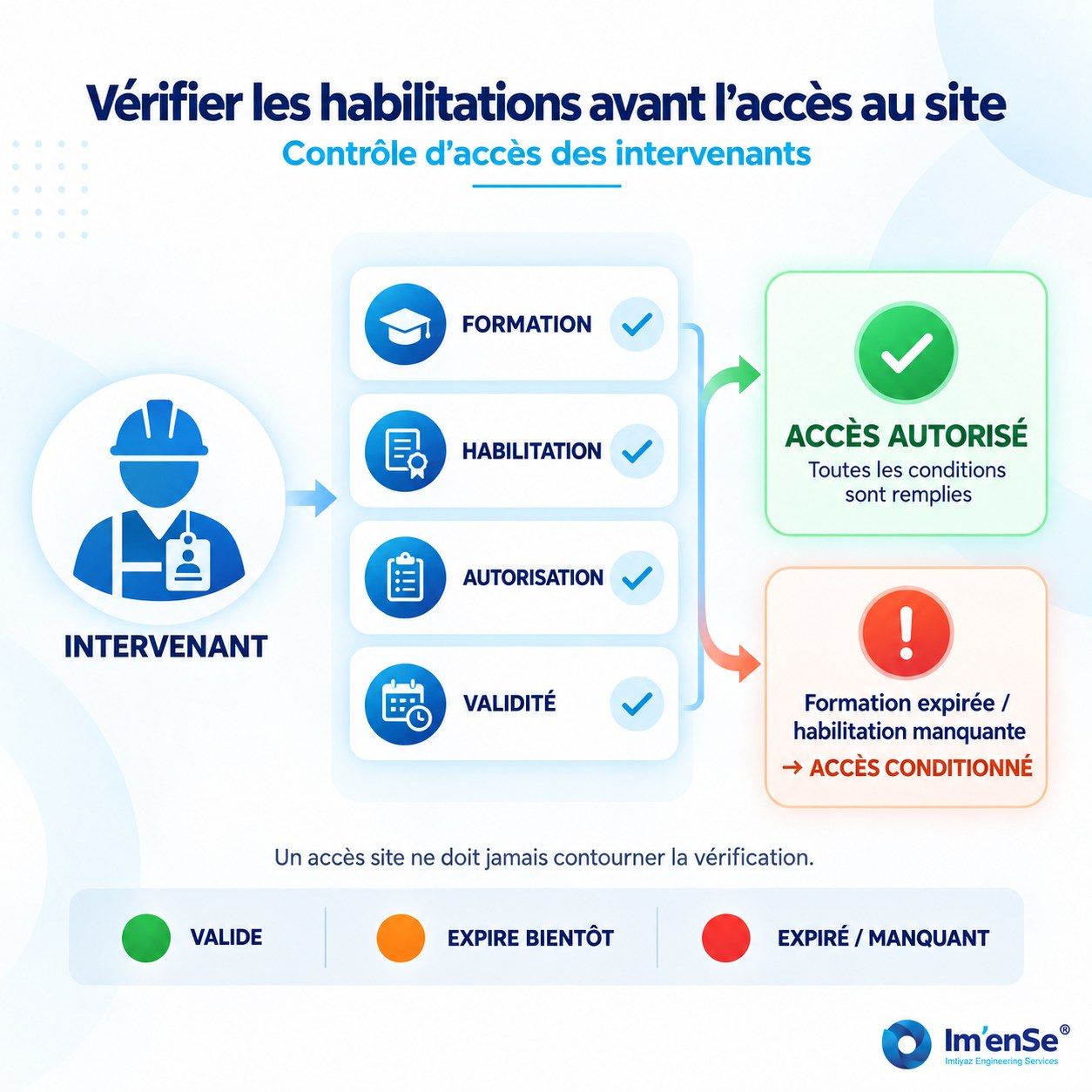
This requirement applies to subcontractors and temporary workers alike. The Belgian Code on well-being at work requires the principal to ensure that external workers have the necessary skills and information before exposing them to site risks. Centralising the tracking of partner companies' qualifications, with expiry alerts on key certifications, is one of the most direct levers for reducing this risk.
Corrective action follow-up: closing the loop
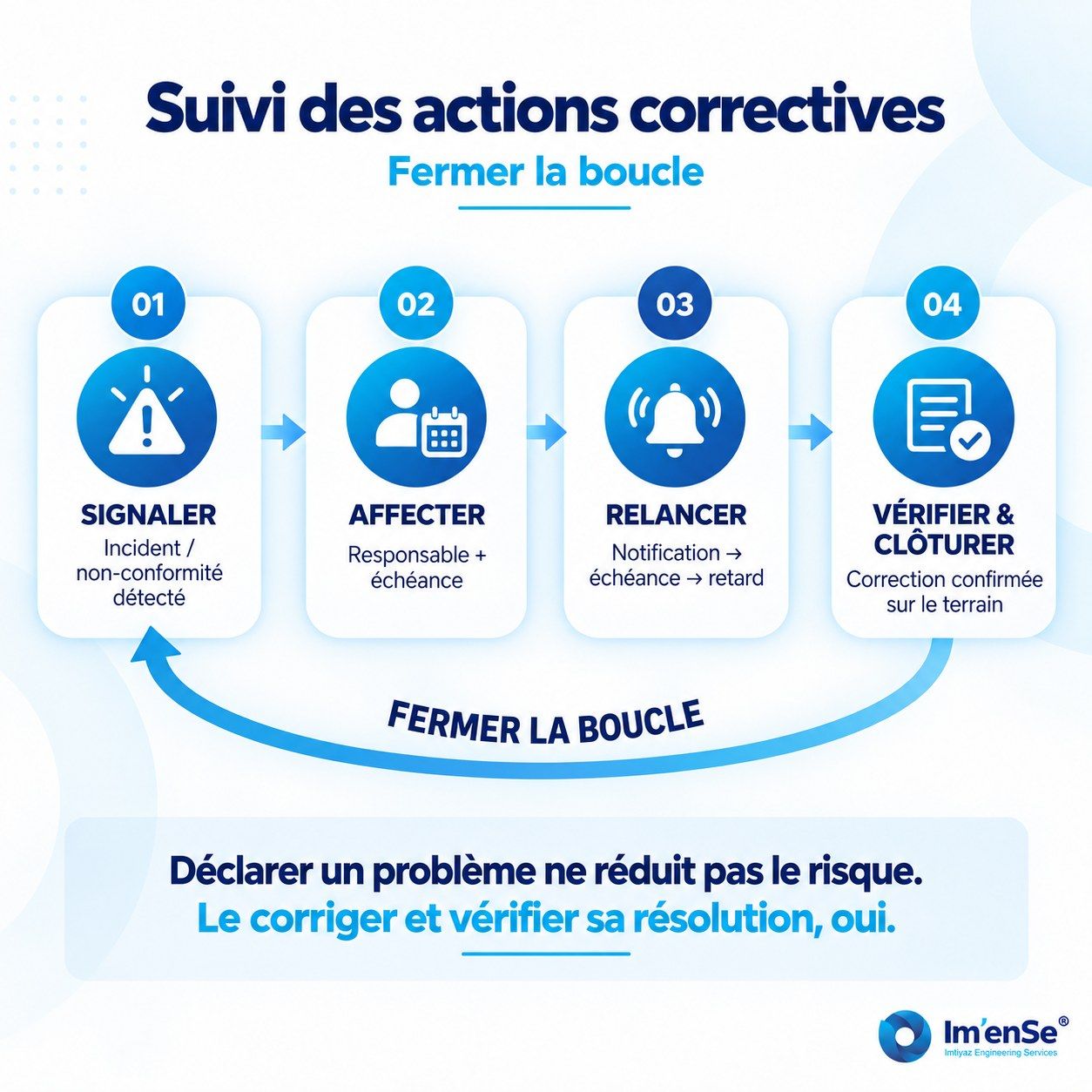
An incident reported without a followed-up corrective action is an incident likely to recur. That observation is simple, but putting it into practice is often where things fail on large sites, where team turnover is high and responsibilities are spread across many companies.
Structured follow-up of corrective actions relies on three mechanisms:
- Clear assignment. Each action is assigned to a named person, with a defined deadline. No action should be left waiting on an undesignated owner.
- Automatic reminders. Without reminders, corrective actions slip down the priority list. A notification as the deadline approaches, followed by an alert if it is missed, maintains the necessary pressure without manual follow-up.
- Documented closure. An action is closed once the correction is verified on the ground, not simply once a form has been filled in. The person closing it confirms that the issue has actually been addressed.
Pre-start training as a prevention tool
Most accidents involving external workers stem from a lack of familiarity with site-specific risks and co-activity rules. This is particularly true for newcomers and temporary workers, whose induction time is short and whose first day on site is statistically the riskiest.
Awareness training before the first shift, even a short one, reduces initial behavioural gaps. Online modules completed before arriving on site can cover general site risks and what to do in the event of an incident. Completion certificates are added to the worker's file and can be checked before access is granted.
Read Part 1: Co-activity and subcontracting on large industrial sites: where risk concentrates