
The Safe Work Method Statement (SWMS), equivalent to the Risk Assessment Method Statement (RAMS), is a prevention document used to analyse and control risks associated with high-risk activities. Often seen as an administrative formality, it nevertheless plays a central role when it is properly integrated into on-site practices.
An effective SWMS/RAMS does not merely describe what must be done, but how the work is actually carried out, under what constraints, and with which real, concrete risks.
What is a SWMS/RAMS really for?
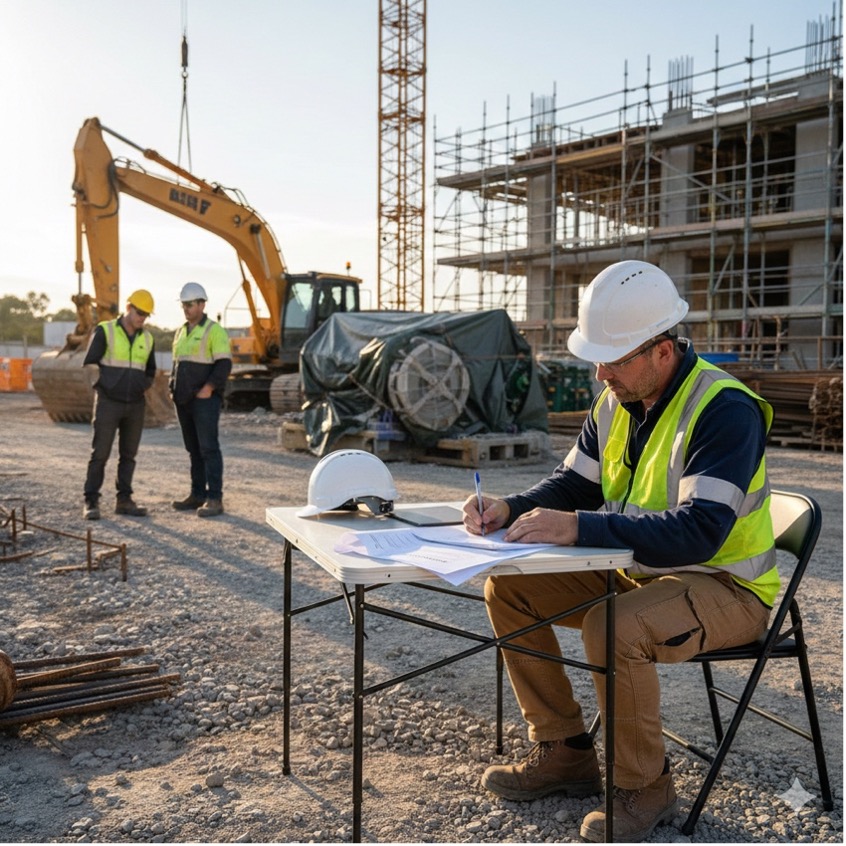
The purpose of a SWMS/RAMS is to:
- Describe the different stages of the work, step by step,
- List the equipment, tools, materials, and products required,
- Identify hazards associated with a specific task,
- Define appropriate control measures,
- Clarify responsibilities and working conditions,
- Serve as a basis for dialogue between supervisors and workers.
Unlike a generic risk assessment, a SWMS/RAMS is contextual: it applies to a specific activity, in a specific environment, at a specific moment.
The limits of “paper” SWMS/RAMS
On many sites, SWMS/RAMS documents exist but are:
- Copy-and-paste versions or duplicates from another project,
- Prepared in advance without being updated,
- Poorly understood by site teams,
- Signed without real ownership, or even without being read,
- Disconnected from operational changes.
Under these conditions, the SWMS/RAMS becomes a compliance document with no real impact on safety.
Towards a living and operational SWMS/RAMS
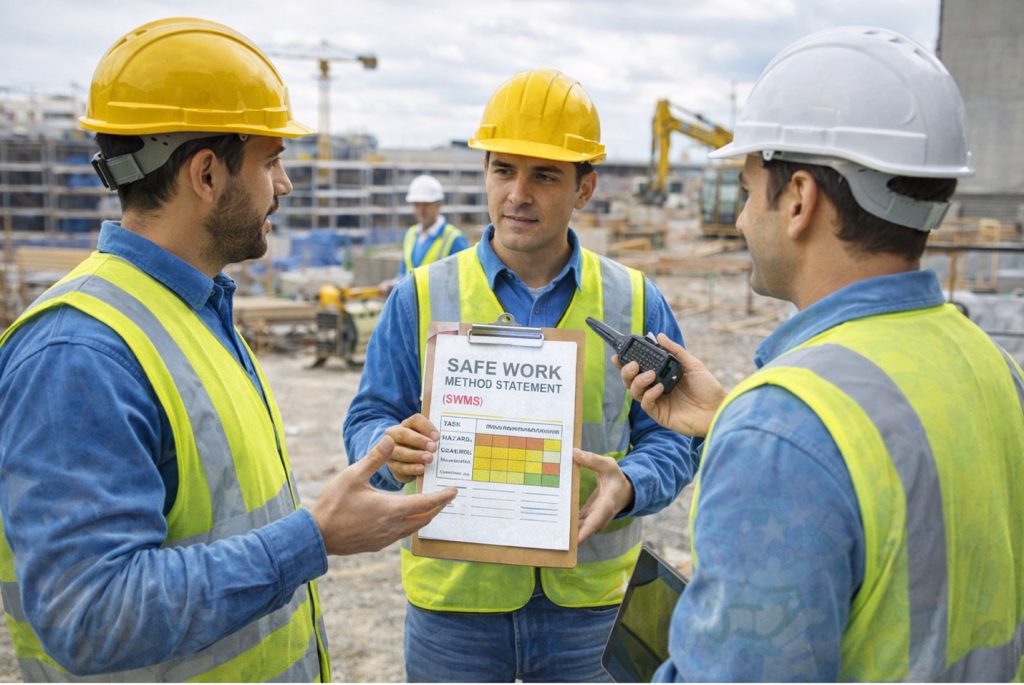
A useful SWMS/RAMS must be:
- Co-developed with workers and validated together with them,
- Explained before work starts,
- Updated as soon as conditions change,
- Used as a reference during the task.
It then becomes a practical aid for carrying out quality work, with logical sequencing, sound planning, and optimized time management.
A driver of safety culture
When used correctly, a SWMS/RAMS promotes:
- Worker engagement,
- Awareness of real risks,
- The right to raise concerns and stop work to adapt the method if necessary,
- Proactive rather than reactive prevention.
It therefore helps transform safety into a collective practice rooted in real work.
The Safe Work Method Statement is not just a document to be produced, but an operational prevention tool to be followed. Its value depends less on its format than on how it is used. A living SWMS/RAMS—understood and applied on site—is one of the most effective ways to reduce the gap between theoretical risk assessments and the operational reality of work execution.