

Occupational risk prevention is not limited to rules and procedures. Safety culture and managerial involvement directly influence how organizations anticipate, manage, and reduce accidents, incidents, and exposure to risks. In a context where work patterns are transforming and psychosocial challenges are becoming central, the human dimension of prevention has become strategic.
What Is Safety Culture and Why Does It Matter?
Safety culture represents the set of shared values, attitudes, and behaviors within an organization regarding the control of work-related risks. It cannot be imposed by decree; it is built through daily interactions, decisions, and operational practices.
A strong safety culture notably promotes:
- sustained attention to prevention in decision-making,
- open communication about risks,
- collective accountability for safe behaviors.
According to a recent study analyzing more than 7,000 scientific publications on safety culture, it is a key factor in creating safer and more effective work environments.
How Safety Culture Influences Performance and Prevention
Link Between Behaviors and Engagement
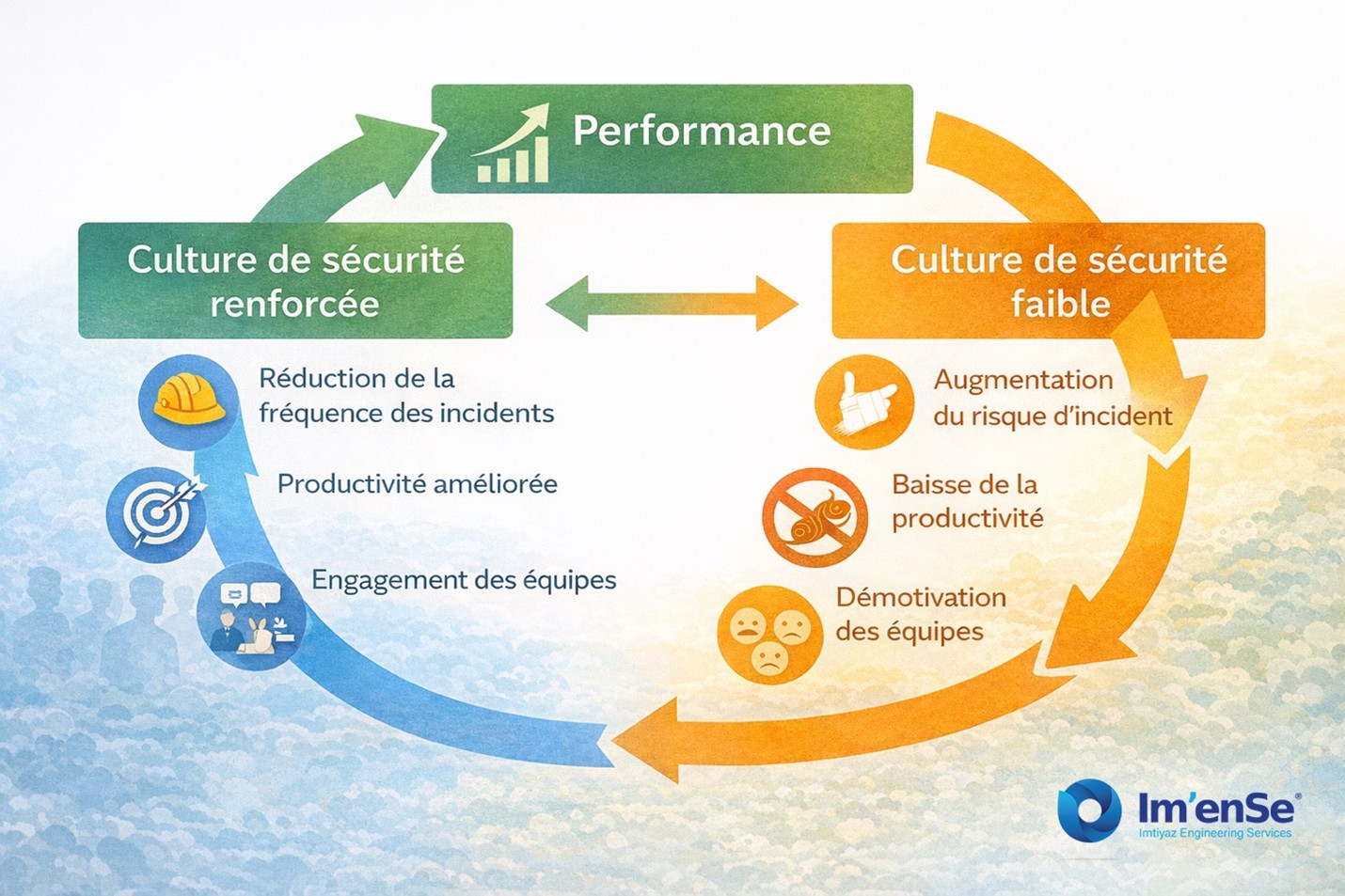
Research shows that safety culture directly influences safety performance:
- work environments that openly value safety have lower accident rates,
- risk perception and motivation to follow good practices are strengthened.
A study published in PMC Public Health highlights that organizations with a higher level of safety culture also reduce psychosocial risks, improving overall employee safety performance.
The Role of Management
Management plays a critical role in building and sustaining a safety culture. When prevention is genuinely valued, it is reflected in:
- leadership by example in safe behaviors,
- consideration of field feedback,
- investment in training and awareness initiatives.
Top-down and bottom-up communication is also essential to drive behavioral change and reinforce ownership of safety practices.
Company Experience and Collective Learning
Prevention is not merely a sum of individual actions, but a collective learning process. High-performing organizations leverage feedback, including near-miss incidents, to continuously improve their practices.
Studies on prevention culture in small businesses show that integrating preventive practices (risk identification, training, concrete actions) is associated with a stronger sense of prevention culture among managers, even when legal requirements are already met.
Contemporary Challenges: Psychology, Engagement, and Safety
Prevention now extends beyond physical safety. Psychosocial issues—such as workload, stress, and lack of support—have measurable impacts on health, motivation, and absenteeism. A recent barometer indicates that mental health disorders have become a leading cause of absence from work, underscoring the need for a holistic approach to safety.
Building a Sustainable Prevention Culture
Organizational Maturity
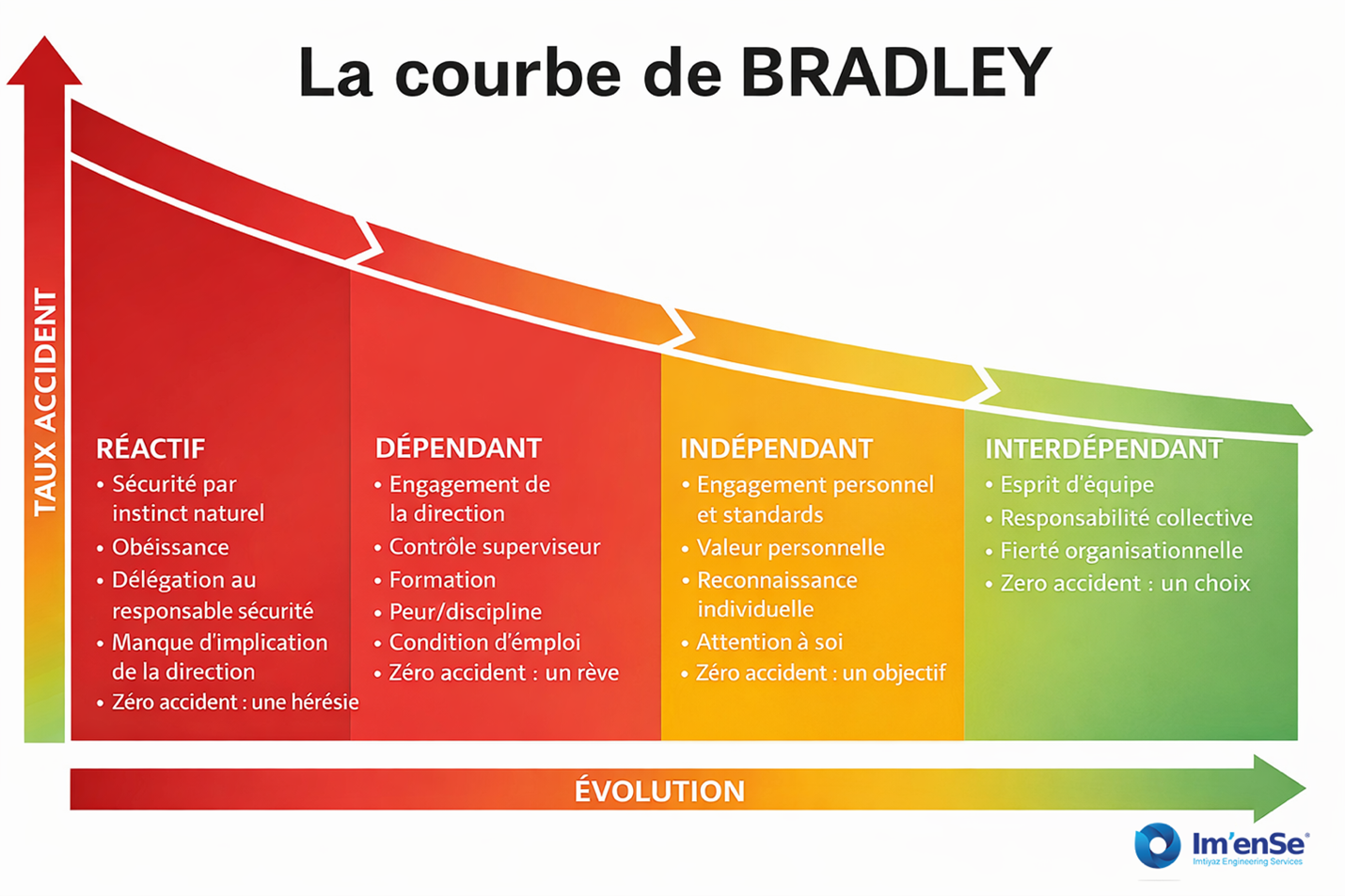
The well-known Bradley Curve illustrates how organizations evolve from a compliance-driven approach toward a culture where safety becomes a shared and systematic objective.
Managerial Best Practices
To strengthen prevention culture, organizations can rely on:
- regular audits of real operational practices,
- participatory training programs,
- safety indicators integrated into operational performance management.